How to Choose an Agentic AI Orchestrator
Choosing the right platform for enterprise-ready Agentic AI Workflows

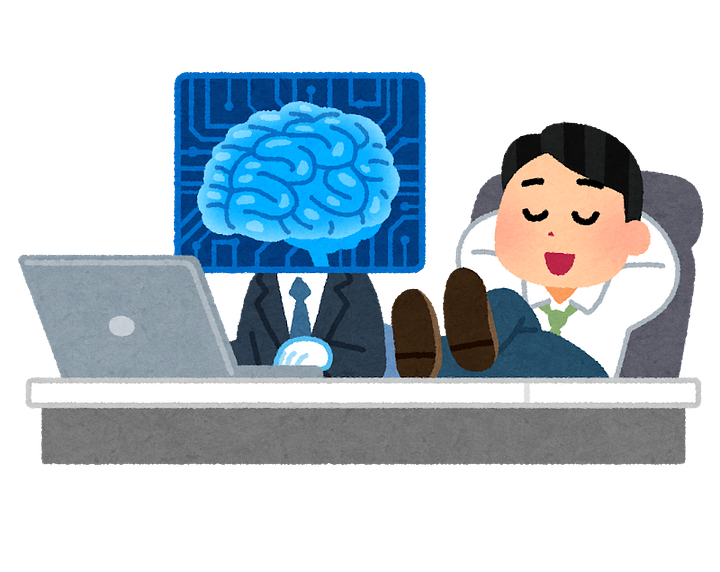
Probably no one has been able to escape the hype around Agentic AI over recent months. I think we have all seen incredible demos: AI Agents acting as subject matter experts, or autonomously writing reliable code to draw insights from data and make business decisions. In the past, those tasks were incredibly time-consuming for humans, involving multiple steps and navigating complex data ambiguity. Now, that ambiguity and complexity can be automated.
In my personal opinion, AI Agents do not flourish in isolation. They truly shine when they are integrated directly into your core business processes.
Naturally, both business leaders and tech experts are excited by these developments. But as reality sets in, a critical question remains: How do we bridge the gap between isolated demos and reliable, real-world business value?
The speed at which the entire ecosystem around Agentic AI is developing is like nothing I have personally ever seen before. However, specific solution types are emerging and maturing, and can now be evaluated for strategic decisions. It may be time to look for a generalized Agentic AI Workflow platform that covers the vast majority (95%) of your business demands.
In this blog post, I want to provide you with actionable insights you can use today.
Who this guide is for
This guide is meant for teams that are beyond the first AI demo and now need to make platform decisions:
-
Enterprise and platform architects who must decide how Agentic AI fits into existing enterprise landscapes.
-
Engineering leads and senior developers who will actually build and operate multi‑agent workflows and need to understand concepts and trade-offs.
-
Product owners and business stakeholders who need enough structure to ask the right questions when evaluating AI orchestration platforms and budgeting for them.
If you are still experimenting with one‑off prototypes, this article can serve as a roadmap for what will matter more when you want to scale to production.
Concept
Agentic AI in the context of workflows adds a new level of complexity. Agents, models, and tools need to reliably communicate, execute tasks, and share their results with one another without breaking down.
An AI Orchestrator is designed to solve these exact challenges by offering a centralized platform where Agentic Workflows can be executed and managed. It provides standardized interfaces, handles complex dependencies, and ensures repeatability. In a nutshell, it introduces the necessary enterprise guardrails - such as robust error handling, state management, and seamless human-in-the-loop oversight. Finally, that's why these platforms are becoming the essential foundation for running complex, production-ready Agentic Workflow systems.
Short Definition: "What is an AI Orchestrator?"

In literature, an AI orchestrator is defined as a central management layer that turns independent components into a coherent, goal-oriented system. [1]. It is the "business glue", that coordinates interactions between separate AI models, tools and data sources. [2]
Nowadays, two main types of orchestrators can be distinguished:
- Workflow Orchestrators (combining deterministic steps with AI decisions, e.g. n8n/Azure Logics Apps/Camunda) and
- Agent Orchestrators (Agents, Tools, Memory, Governance, e.g. Azure AI Foundry, Databricks)

Categorization of AI Orchestration Solutions

The market for AI orchestrators in the broader sense is currently fragmented and defined by different design philosophies. Without a clear definition for different categories, we might see a "Conceptual Retrofitting" [7], which will lead to non-deterministic approaches/workflows being put into perspective from a deterministic model of understanding.
To better get a picture of what is available in the Agentic AI workflow market, we should classify solutions into individual dimensions:
1) Orchestration Approach
- Central Orchestration: A central orchestrator AI agent acts as the coordination of the system, delegates tasks to different agents but performs all final decisions. [3]
- Decentralized Orchestration: Specialized AI agents interact directly with each other and reach a shared statement via peer coordination. [3]
- Hierarchical Orchestration: There are levels of AI agents, whereas parent agents steer the execution of their children. [4]
- Federated Orchestration: Collaboration between independent AI agents, without sharing all data or handing off tasks completely. [4]
- Deterministic Orchestration: Combining the probabilistic nature of LLMs with the reliability of statically typed business logic. Utilizes pre-defined paths (workflows) to ensure consistency. [8]
2) Development Approach
- Code-First SDKs and Frameworks: Uses code-native functionalities for developing/orchestrating AI agents and provides granular control for software developers over architecture and processes. [5]
- Visual Tools, Low-Code/No-Code-Platforms: Uses drag-and-drop or other mechanisms to lower entry barriers for non-technical users. [6]
- Enterprise Platforms: Consolidates all above-mentioned types on a single enterprise-native platform to use economies of scale and primarily offer governance, safety and compliance features.
Full List of Requirements for AI Orchestrators
The current (as of 04/2026) literature defines which requirements are the most common for AI orchestration solutions. Below you find a table based on literature research:
Connectivity & Architecture
| Priority | Capability | Why it matters |
|---|---|---|
| Must‑have | Provider agnostic design | The platform can talk to multiple LLM providers, including internal or self‑hosted models, so you are not locked into a single vendor. [16] |
| Must‑have | API and data source integration | Built‑in mechanisms to connect external systems and data sources (REST, databases, event streams, etc.) as first‑class inputs into your workflows. |
| Must‑have | Support for open protocols | Uses standardized protocols such as MCP (Model Context Protocol) or Agent‑to‑Agent patterns so agents, tools and models can interoperate across ecosystems. [13] |
| Must‑have | Sandboxed tool execution | Agent tools and actions run in isolated environments to protect corporate infrastructure and reduce blast radius. [10] |
| Design | Modular agent components | Clear separation between workflow logic, model layer and tools, so each layer can evolve independently without breaking the others. [16] |
| Must‑have | Structured outputs as an interface | Agent outputs are exposed in a structured, machine‑readable way (JSON, events, schemas) so downstream systems can reliably consume them. [14], [16] |
| Quality | External prompt management | Prompts are managed outside the agent definition (e.g., in a prompt store), so versions can be updated and rolled back without redeploying the whole platform. [12] |
| Quality | Developer experience | Agents can be authored flexibly – via code, visually, or a mix of both – to support different skills and teams. |
Performance & Scalability
| Priority | Capability | Why it matters |
|---|---|---|
| Performance | Low end‑to‑end latency | Tasks are processed quickly enough that interactive and near‑real‑time scenarios remain usable for end users. [9] |
| Performance | High throughput | The orchestrator can handle large request volumes (e.g., thousands of calls per second for simple API orchestration) without degradation. [9] |
| Performance | Horizontal scalability | Workloads can scale out across nodes or instances to absorb traffic spikes and growth. [9] |
| Performance | Resource efficiency | Techniques like caching, batching and reuse of context reduce compute and token costs per workflow run. |
Governance, Security & Compliance
| Priority | Capability | Why it matters |
|---|---|---|
| Must‑have | RBAC and audit trails | Fine‑grained, role‑based access control plus complete logging of actions and decisions to satisfy compliance requirements. [16] |
| Must‑have | Output evaluation | Systematic evaluation of agent outputs (e.g., tests, automatic scoring, LLM‑based judges) to track quality over time. [16] |
| Must‑have | Layered security controls | Multiple defenses such as sandboxing, prompt shields and prompt‑injection protection to reduce security risk. [10] |
| Quality | Observability and tracing | Deep traces on node and workflow level to shorten mean time to detect and repair issues. [16] |
| Governance | Explainability | Ability to reconstruct and explain why a given decision path was taken ("explainable AI" for workflows and agents). [16] |
| Must‑have | User impersonation for tool use | Tools and downstream systems are called under the active user’s permissions so authorization rules stay intact. [10] |
| Must‑have | Policy‑driven execution | Central policies (e.g., DLP, data residency, allowed actions) define what agents may or may not do. [16] |
| Must‑have | Workflow lifecycle management | Orchestrator supports full lifecycle control via CI/CD (promotion, canary, rollback) for workflows and agents. [16] |
| Must‑have | Catalog of agents and actions | Central catalog of tools, agents and data assets to avoid "agent sprawl" and duplicate capabilities. [10], [16] |
| Quality | Guardrails on inputs and outputs | Input filters and safety policies prevent harmful prompts and responses from reaching users or systems. [16] |
Cognitive Control & Reasoning
| Priority | Capability | Why it matters |
|---|---|---|
| Must‑have | State and memory management | Short‑ and long‑term memory across interactions so agents can maintain context over multi‑step workflows. [15] |
| Quality | Deterministic paths where required | Critical business logic can be constrained to fixed, deterministic paths to limit LLM unpredictability. |
| Must‑have | Context management | Compression, summarization and retrieval keep context windows focused and reduce hallucinations in long threads. [11] |
| Quality | Ontologies and knowledge models | Use of enterprise ontologies or knowledge graphs to steer how context is selected and interpreted. [16] |
| Must‑have | Uncertainty awareness and escalation | The system recognizes when it is unsure or the risk is high and routes to a human instead of guessing. [9], [16] |
| Performance | Meta‑reasoning and trust calibration | Quantitative metrics (e.g., calibration measures) help track when agents are over‑ or under‑confident and tune them accordingly. |
Economics
| Priority | Capability | Why it matters |
|---|---|---|
| Performance | Cost visibility and routing | Real‑time tracking of token and compute spend, plus routing of simple tasks to cheaper options. [15] |
| Performance | Model routing strategies | Dynamic assignment of steps to cost‑effective models, reserving premium models only for complex reasoning. [10] |
Operations, Reliability & Interaction
| Priority | Capability | Why it matters |
|---|---|---|
| Must‑have | Resilience and fault tolerance | Patterns such as retries, circuit breakers, fallbacks and self‑healing agents keep workflows running despite partial failures. [15], [16] |
| Must‑have | Versioning and safe rollback | Prompts, workflows and agents are versioned and can be rolled back instantly if regressions appear. [12], [16] |
| Interaction | Human‑in‑the‑loop checkpoints | Explicit approval steps for risky or expensive actions (for example, "review before apply") ensure humans stay in control. [16] |
Summary of Key Requirements for AI Orchestrators
When you look across the dimensions in the tables, a few requirements stand out as central for evaluating Agentic AI platforms:
Integration and openness
The platform should connect to existing APIs, data sources and tools, work with multiple model providers, and expose structured outputs (for example JSON or events) that downstream systems can process reliably.
Scalability and performance
It needs to handle interactive use cases with low latency, scale horizontally for higher load, and use resources efficiently (caching, batching, model routing) to keep costs predictable.
Economics and cost control
The platform should provide real-time visibility into token and compute spend and apply cost-aware routing strategies, assigning simple tasks to cheaper models or runtimes while reserving premium options for complex reasoning.
Security, governance and compliance
Capabilities such as RBAC, audit trails, sandboxed tool execution, policy‑driven behavior, and a central catalog of agents and tools help align AI workflows with existing security and compliance standards. This also includes systematic evaluation of outputs, explainability of decision paths, lifecycle controls (promotion, canary, rollback), and guardrails on inputs and outputs to enforce safety policies.
Control over reasoning and behavior
State and memory management, context management, deterministic paths for critical steps, and mechanisms for uncertainty handling and escalation support both flexibility and predictable behavior. Enterprise ontologies or knowledge models, plus meta-reasoning and confidence calibration, further help orchestrators pick the right context and tune agent behavior over time.
Operational robustness
Observability, tracing, resilience patterns (retries, fallbacks), versioning and rollback, plus human‑in‑the‑loop checkpoints are needed to operate Agentic workflows as reliable production systems rather than one‑off experiments.
Market Situation for AI Orchestrator Solutions
Before looking at individual solutions, it helps to remember that platforms differ along two main dimensions: how they orchestrate work and what kind of product they fundamentally are.
In regards to Abstraction Level, some solutions focus only on Agentic AI orchestration, while others are more generic platforms that have added AI capabilities as just one of their many offerings.
When it comes to Orchestration Styles, not every platform supports all patterns equally. Some are optimized for central "orchestrator" agents, others shine in hierarchical supervisor–worker setups, and only a subset can truly support decentralized or federated collaboration scenarios in a robust and trustworthy way. Understanding which orchestration styles are solid and production-grade vs. awkward and instable to use in each solution is important long‑term.
Thought: Those two aspects combined matter. Generic enterprise platforms tend to perform nicely in governance, integration and operations, while specialized tools often move faster in Agent features and developer productivity. Additionally, the correct Orchestration Style may depend on your internal processes and tool landscape. You should look at some of these solutions yourself and see how they fit into your companies' processes.
This following table is intentionally high‑level; it helps you shortlist tools rather than rank them:
| Name | Orchestration Style | Development Modality (Abstraction Level) |
|---|---|---|
| Agent Bricks | - Central orchestration ("multi‑agent supervisor") - Hierarchical orchestration (supervisor pattern coordinating specialized agents) - Federated orchestration (via MCP catalog) | Enterprise platform (integrated Mosaic AI governance) |
| AutoGen | - Central orchestration - Decentralized orchestration (peer conversations) - Hierarchical orchestration (orchestrator model) - Federated orchestration | Code‑first SDK and frameworks |
| Azure AI Foundry | - Central orchestration - Hierarchical orchestration (agents interacting via tool calls) - Deterministic orchestration (workflow‑based) | Enterprise platform (governance and security focus) |
| Azure Logic Apps | - Central orchestration (agent loop) - Hierarchical orchestration (workflows can call other workflows) - Deterministic orchestration (originally deterministic concept, extended with agent capabilities) | Enterprise platform (managed iPaaS) |
| Camunda 8 | - Deterministic orchestration (process‑driven based on BPMN standard) - Hierarchical orchestration (via BPMN sub‑processes) - Central orchestration (non‑deterministic components within deterministic flows) | Enterprise platform (enterprise workflow engine) |
| CrewAI | - Hierarchical orchestration (supervisor–worker) - Central orchestration (sequential process model) - Decentralized orchestration - Federated orchestration - Deterministic orchestration | Visual low‑code/no‑code platform (via CrewAI Studio) |
| LangGraph | - Central orchestration (supervisor) - Decentralized orchestration - Hierarchical orchestration - Federated orchestration | Code‑first SDK and frameworks |
| n8n | - Hierarchical orchestration (orchestrator–worker graphs) - Deterministic orchestration (workflows) - Central orchestration | Visual low‑code/no‑code platform |
| Vellum AI | - Central orchestration - Hierarchical orchestration (manager–worker) - Federated orchestration - Deterministic orchestration (workflow builder) | Enterprise platform (focus on compliance and evaluations) |
| Google Vertex AI Agent Builder | - Central orchestration - Hierarchical orchestration (agents with roles and responsibilities) - Federated orchestration (MCP protocol) - Decentralized orchestration (agent‑to‑agent) - Deterministic orchestration | Enterprise platform (managed cloud) |
As this field is evolving fast like I never saw before, I decided against including a massive comparison matrix that scores every platform against every requirement.
At this point, you know the theoretical categories of Orchestration Solutions. Start by looking at your own organization and processes: What kind of orchestration patterns do you actually need, and which development modality fits your teams? Then shortlist one or more options from the table above and evaluate them hands‑on.
If you end up with a small set of finalists, take your most critical requirements from the requirements tables and check how well each candidate satisfies them in practice.
If you already use a major cloud platform like Azure or Google Cloud, it is usually smartest to start with their native offerings rather than introducing a completely new stack.
Likewise, if you already rely on a process automation engine such as Camunda, first explore how its emerging Agentic capabilities can be extended before bringing in yet another orchestration layer.
Conclusion (tl;dr)
-
Stick with what you have (Enterprise): If you are already utilizing a major cloud platform like Azure, check their native tools before looking elsewhere. Azure Logic Apps (Standard) with Agent Loop for example is now a top-tier AI workflow solution with all major features required according to literature and has a perfect integration into your enterprise governance.
-
But, watch the scale (if you approach hundreds of workflows, for example 500+): If you have a high volume of workflows, Azure Logic Apps can get expensive. Assess standalone platforms like n8n or Camunda. Keep in mind that while self-hosting is "free," the maintenance costs could exceed those of a managed cloud service. It depends on your specific situation.
-
Starting from scratch (SME): If you are an SME and don't have a dedicated cloud provider, either just try Azure Logic Apps or n8n (if you like self-hosted / on-prem friendly). Those are the most flexible "Swiss Army knives" for rapid prototyping, and you pay close to nothing at small scale.
Sources
[1] The Orchestration of Multi-Agent Systems: Architectures, Protocols, and Enterprise Adoption.
[2] Foundations of GenAI Orchestration: RAG, MLOps, and LLMOps – Zengzheng Jiang.
[4] What is AI Agent Orchestration? | IBM.
[6] Multi-Agent Supervisor Architecture: Orchestrating Enterprise AI at Scale | Databricks Blog.
[7] Agentic AI: A Comprehensive Survey of Architectures, Applications, and Future Directions.
[9] How to Evaluate and Benchmark AI Orchestrators?
[11] AgentX: Towards Orchestrating Robust Agentic Workflow Patterns with FaaS-hosted MCP Services.
[12] A Practical Guide for Designing, Developing, and Deploying Production-Grade Agentic AI Workflows.
[13] The Orchestration of Multi-Agent Systems: Architectures, Protocols, and Enterprise Adoption.
[14] Multi-Agent Supervisor Architecture: Orchestrating Enterprise AI at Scale (Databricks Blog).
[15] Orchestral AI: A Framework for Agent Orchestration.
[16] Trustworthy Orchestration Artificial Intelligence by the Ten Criteria with Control-Plane Governance.
Comments
Comments are hosted by an external provider, Giscus. For privacy compliance, the comment section requires your explicit consent to load. By clicking the button, you accept the applicable Data Protection Agreement.