Dynamic Business Process Orchestration using AI Agents
How to build the modular foundation for AI-driven, dynamic business automation.

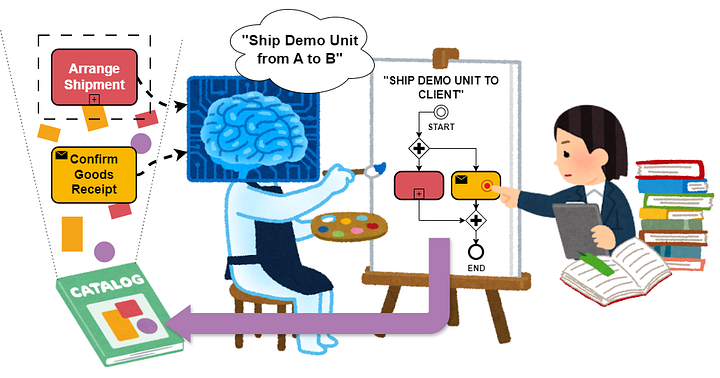
For most large organisations, processes can't just exist. "We've always done it this way" is dangerous. Without a clear understanding and documentation of how work is actually done, implementing AI solutions becomes significantly more difficult, as you first need to discover and document the processes before you can automate or orchestrate them.
"Many organizations want Agentic AI. Few realize the first step isn't AI - it's understanding how the business actually works." - Martin Jurran
Fortunately for most businesses, this should not be a new requirement. Mature organisations are already expected to understand, document, and govern their processes; not only to improve productivity, but also to satisfy audit, risk, and compliance requirements.
To meet those obligations, processes are typically documented, controlled, and made auditable through process management systems such as SAP Signavio or similar platforms.
In most large enterprises today, business processes fall into one of three categories: fully manual, partially automated/partially manual, or fully automated. Regardless of their level of automation, they represent defined business activities that can be observed, documented, governed, and ultimately executed in a repeatable way.
Now, let's take that idea one step further. What becomes possible if processes are not only fully documented, but also digitally represented, tracked, and governed through workflow platforms such as Power Automate, Logic Apps, or Camunda? And what happens when Agentic AI can discover and orchestrate those process building blocks dynamically?
What You'll Learn
After reading this article, you will understand:
- Why a process catalogue is the foundation for AI automation.
- How AI Agents could assemble existing process building blocks into 'new workflows' on demand.
- How Agentic AI could handle scenarios that are not entirely covered by predefined processes.
- How Agentic AI could work with business experts to continuously improve and expand your process landscape.
The Traditional Model
To illustrate the concept, let's start with a simple procurement process. Consider the following end-to-end, even though very simplified, procurement workflow.
Scenario: At our site "Location A", a pump ordered from a vendor catalogue is about to break and we need a replacement. Field service starts the established workflow for replacing an existing with a new one.
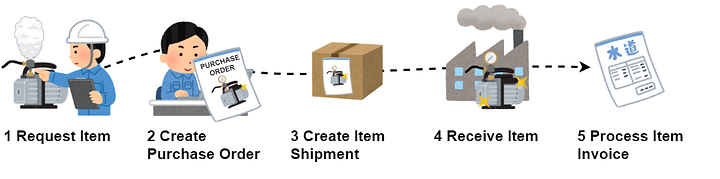
- 1 Employee requests an item, e.g. a replacement pump.
- 2 Procurement creates a purchase order (PO) for the item.
- 3 Supplier creates an item shipment.
- 4 Employee receives goods at the destination site.
- 5 Employee processes the item invoice.
This workflow follows the standard as defined in the process portal. It is documented, approved, and auditable. Every step has defined responsibilities, controls, and audit evidence.

Where Processes Get Messy
In reality, business rarely operates under ideal conditions. While a documented process provides the standard path, day-to-day operations often encounter exceptions, edge cases, and situations that were never explicitly accounted for.
Scenario: At our site "Location A", a pump is about to break and we need a replacement. The pump is individually manufactured and would take a long time to produce. Too long. Imagine an employee knows the pump already exists in an R&D lab called "Location B" as it was bought for demo purposes before. Now the idea is to ship it to "Location A", the site, to have a replacement ready.
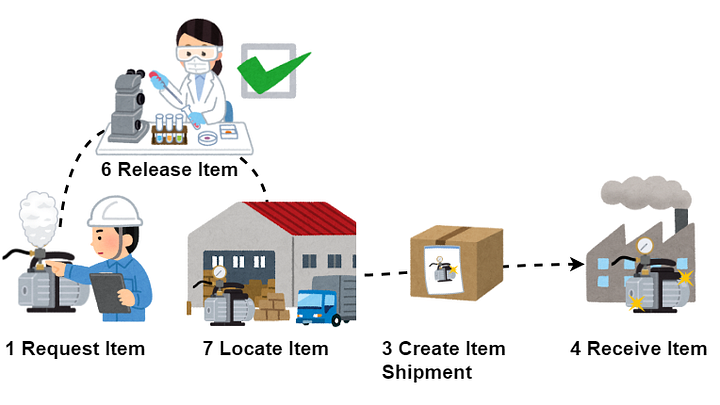
The following workflow was followed to achieve the goal:
- 1 Employee requests an item, e.g. a replacement pump.
- 2 Asset Owner releases the item, e.g. the R&D lab approves the pump being transferred to site and updates asset management software.
- 3 "Location B" storage responsible person locates the item in the warehouse.
- 4 The item is shipped internally.
- 5 Employee receives the item at the destination site.
The standard procurement process does not apply.
As we have a custom request that tackles multiple domains (e.g. asset management, expediting, engineering), we can't utilize the established process. We have these main differences:
- ❌ No supplier is involved.
- ❌ No new purchase order is needed.
- 💡 Internal transfer must be arranged.
- 💡 Inventory records may need adjustment.
- ✅ Shipping still needs to happen.
Most organizations solve this through emails, phone calls, and manual coordination.
"Modularity originated as a software engineering concept. In software engineering, we keep systems modular because reusable building blocks create flexibility. I believe the same principles increasingly apply to business processes: the more modular and loosely coupled processes are, the easier it becomes for AI Agents to discover, reuse, and assemble them into new workflows." - Martin Jurran
Even though we are dealing with a custom workflow spanning multiple business domains, the individual workflow steps are recurring. They are tasks that happen regularly in the business.
So, by initially designing these workflow steps as independently executable building blocks and automating them via a suitable platform, the correct processes can be assembled and executed for several scenarios.
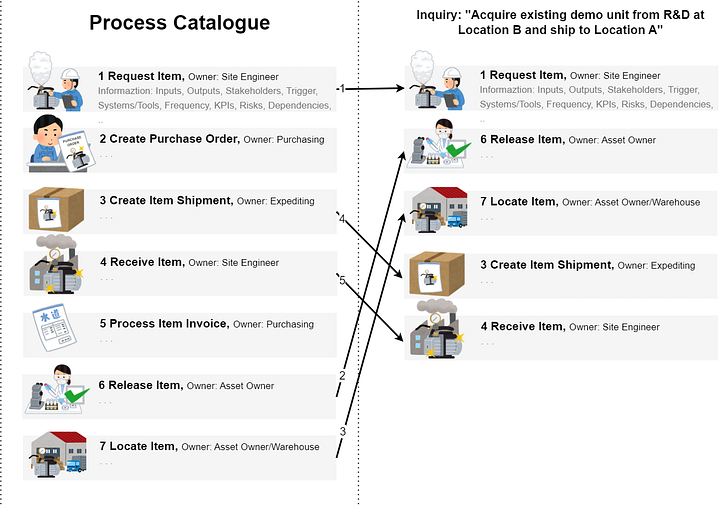
The concrete inquiry of "Acquire existing demo unit from R&D at Location B and ship to Location A" could find its way into the process catalogue as "Physically transfer asset-managed item." Next time a similar request reaches the system, we already have an approved process in place.
The specific workflow still needs to be reviewed and signed off by a business expert. Once approved, it can be executed and may find its way into the Process Catalogue if useful.
The Process Catalogue Approach
Instead of hard-coding workflows, an AI agent can work with a catalogue of approved process components.
The catalogue is derived from existing process management documentation and can be accessed through an API, a process catalogue connector, or an MCP Server connection to the process management system.
A catalogue could contain data like this:
| Process Component | Description | Domain | Approval Required |
|---|---|---|---|
| Request Asset Transfer | Move an existing asset between sites | Asset Management | Yes |
| Create Purchase Order | Purchase goods from a vendor | Procurement | Yes |
| Receive Goods | Receive and inspect deliveries | Logistics | No |
| Update Inventory Record | Adjust stock and asset registers | Inventory | No |
The agent does not invent new business processes. It does not call external systems directly. Instead, it selects approved building blocks and assembles an appropriate workflow for the user request. A dedicated workflow engine (e.g. Logic Apps or Camunda) takes over the execution and makes what happened auditable.
Building a Closed Improvement Loop
The first time an agent encounters a scenario, it may propose a workflow assembled from existing process components.
A business expert reviews the proposed workflow, makes adjustments where necessary, and approves its execution. The agent records:
- Which process components were selected.
- Which modifications were made.
- Which approvals were required.
- Whether the workflow outcome was successful.
Over time, these validated workflow variations become part of the organization's process catalogue and documentation.
The agent may later implement the combination of workflow components in a proven version directly in an automation platform like Azure Logic Apps or Camunda.
The new or adjusted process is documented in the process management system, while the generated workflow on the automation platform gets linked.
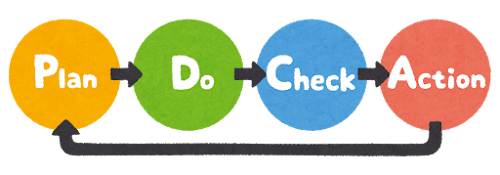
This creates a continuous improvement cycle where experts teach the agent, and the agent helps expand and maintain the process landscape.
Conclusion: The Path to Full Business Automation
Agentic AI will not magically automate a business that does not understand its own processes. Before agents can reason, orchestrate, and execute work, organizations must first establish a clear and governed understanding of how the work is done.
Fortunately, most large enterprises already possess the foundation. Their processes are documented, controlled, and audited through process management systems, while many activities are already partially or fully automated through workflow platforms.
The next step is to stop viewing these processes as isolated end-to-end flows and start treating them as reusable business capabilities. When these capabilities are exposed through a governed process catalogue, AI agents can dynamically assemble workflows that address both standard and previously unforeseen business scenarios.
Over time, expert feedback can be incorporated back into the process catalogue, creating a closed improvement loop in which process knowledge, automation, and AI continuously reinforce one another.
The journey toward full business automation may therefore look something like this:
- 1 Process Documentation
- 2 Process Governance
- 3 Workflow Automation
- 4 Reusable Process Capabilities
- 5 Process Catalogue
- 6 Agentic Workflow Assembly
- 7 Human Validation
- 8 Continuous Learning
- 9 Full Business Automation
The goal is not for AI agents to invent new business processes. The goal is for them to intelligently compose approved process capabilities to achieve business outcomes while maintaining governance, compliance, traceability, and auditability.
If organizations can build and maintain a digital representation of how work is actually performed, Agentic AI may eventually become the orchestration layer that transforms documented processes into autonomous business operations.
Frequently Asked Questions (FAQ)
Why is a process catalogue the foundation for AI automation?
A process catalogue defines the business capabilities, controls, and process steps executed at an organization. Without a process catalogue, you must first discover how your business operates before you can automate it.
How can AI Agents assemble existing process building blocks into 'new workflows' on demand?
By selecting approved process steps from a process catalogue based on a user's objective, then combining those steps into a workflow that fits the scenario. Instead of following a predefined process, the agent assembles the required building blocks at runtime while respecting existing controls and approvals.
How can Agentic AI handle scenarios that are not entirely covered by predefined processes?
By selecting and combining approved process building blocks from a process catalogue. Instead of requiring a dedicated workflow for every situation, the agent assembles the steps needed to achieve the desired business outcome while applying existing controls, approvals, and governance rules.
How can Agentic AI work with business experts to continuously improve and expand your process landscape?
Through proposing new workflow combinations from existing process building blocks, while business experts review, adjust, and approve them. Approved workflow patterns can then be added to the process catalogue, allowing similar scenarios to be handled directly via an approved process in the future.
If an agent cannot assemble a workflow that satisfies a business request using approved process components, it may reveal gaps. These gaps can be reviewed by process owners and incorporated into the catalogue.
Ideally, the process catalogue becomes comprehensive enough that agents can fulfill most requests by selecting existing workflow patterns rather than creating new combinations.
Comments
Comments are hosted by an external provider, Giscus. For privacy compliance, the comment section requires your explicit consent to load. By clicking the button, you accept the applicable Data Protection Agreement.